But not of Pushkin, although he is involved here.
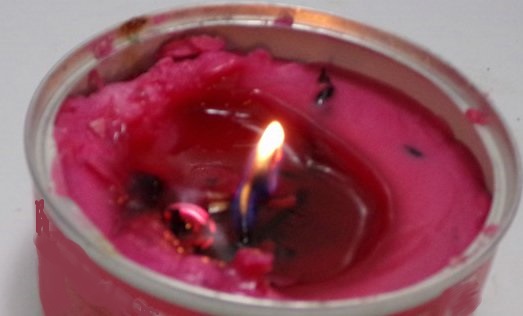
It all started with the fact that I bought several memorial candles for my dead relatives and my cats, but they all turned out to be defective. The fuse lit up and went down after a couple of minutes.
I am a quick-tempered person, so five candles at once, which I bought and immediately tried everything out, caused a strong excitement after unsuccessful attempts to light them. The point, of course, is not the money, but the fact that the dates were memorable, and there was no time to go to another store to buy new ones. I tried to insert others made of woven ropes, but I didn’t like them
And then a thought flashed through my mind:
What makes the wick burn?
Due to the fact that it is lowered into stearin, which melts from the lower part of the flame torch and then rises through the CAPILLARIES of the wick into the combustion zone.Gorenje It’s NOT the WICK that’s burning, but stearin! The wick serves only as a capillary conductor of liquid stearin to the flame. The rise is due to the capillary effect of wetting the walls of microtubules of capillaries with stearin. If these walls were stearinophobic, that is, “repellent” stearin molecules, not a single candle would burn.
For example, mercury does not wet glass and its meniscus in a glass cup is convex, not concave. If mercury burned like stearin, then the “mercury candles” would NOT burn through the glass fibers!
I remembered that I have quite a few woven copper strips used in soldering as an absorbent solder material. I cut off a piece of such a braid (with a highly developed capillary surface!), stuck a stick deep into the candle stearin and lit this “wick”, holding the flame next to the stearin for a few seconds to melt and rise along the copper braid.
The copper wick caught fire and burned for hours properly!
Since copper is thermally conductive, the wick from it must be fixed at the bottom of the cup and the braid must retain its shape, even when very heated.
The following idea immediately came up:
If the statue of the Copper Horseman was not cast from bronze, but made of braid, or at least only its surface layer, slightly separated from the main body of the statue, then by placing such a “horseman” in a stearin bowl, and igniting the stearin-soaked braid, WE WOULD GET a long-burning COPPER HORSEMAN!
The following idea:
To make candles NOT with an ORDINARY wick, but “Artistically, figuratively” made of copper braid.Let’s say any figurines, the same miniature Bronze Horseman, Giordano Bruno, in general, any suitable image. They do not have to be three-dimensional, a “mini-pattern woven from a braid” is sufficient.
Such. here is an invention that is many, many centuries LATE. After all, it could have been made by the inventors of candles or oil lamps!!!
The same talented inventor of the safe mining lamp, Humphrey Davy, could have thought of the reverse use of copper: Not a copper mesh to protect the gas in the mine from ignition due to the oil or wick burning in it, but something similar – a braided copper for a “curly wick”!
The most interesting thing in all of the above (for me personally) is exactly why such simple ideas did not come to people centuries or even millennia earlier???
There was copper, the ability to make fibers or meshes from it, that is, there was probably already a hint of using the capillary effect.
IT’S STRANGE…
Faciant meliora potentes.
26 XI 2024

 Esprit de L'escalier