I have already written about these swinging magnets, oscillating under the influence of fluctuations in the geomagnetic field. I have twelve such magnets and another sheet of non-MAGNETIC copper plate suspended in my living room. All oscillate with different frequency and amplitude. Moreover, the frequency of their oscillations DOES NOT DEPEND on the length of the thread on which they are suspended, or on their moment of inertia.
So, WHAT causes such strong differences in the oscillation period from a few tens of seconds to about two seconds?
At first, I thought that different magnets were affected by fluctuations in the geomagnetic field, which also had different periods of oscillation. But I am gradually leaning towards another, more plausible explanation, although I do not exclude the above-mentioned assumption at all.
A new explanation.
Each magnet occupies a certain position in space under the influence of two “competing” forces: The force of the interaction of this magnet with the geomagnetic field and the force of twisting the suspension thread. Depending on the ratio of these forces, the magnet takes a certain direction in space.
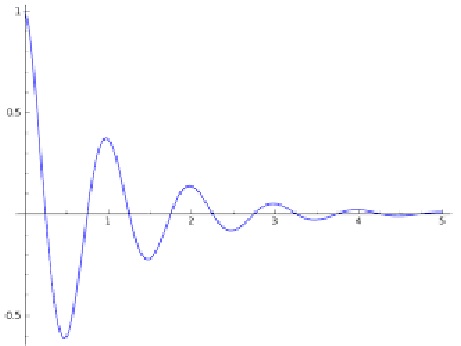
Look at the drawing. The relations of these two forces can be depicted on it in the form of horizontal dashes intersecting curves. The greater the twisting force of the thread, the closer the dash will be located to the top of the curve. The weaker the twisting force of the thread (compared to the magnetic turning force), the lower the line will be, closer to the wide base. Consequently, rapidly swinging magnets are suspended on threads with strong twisting moments (again, relative to the strength of its interaction with the geomagnetic field) and therefore the frequency of their swings is greater. Magnets that interact more strongly with the geomagnetic field and its fluctuations and with a weaker twisting force will swing more slowly!
And the most interesting thing: And the copper sheet? Why is it swinging too?
Here, it swings NOT because of the ratio of the strength of the geomagnetic field and the twisting of the thread, but depending on the first derivative of the strength of the fluctuation of the geomagnetic field in time (more precisely, magnetic induction in time) – dB/dt. Rapid or slow CHANGES in the acting geomagnetic field generate large or smaller induction currents in a completely NON-MAGNETIC copper sheet, which create their own magnetic fields, and these fields interact with the resulting changes in the geomagnetic field.
That is, in this case, we have two types of fluctuation sensors:
The amplitude of the change in the geomagnetic field and the RATE of this change!
And the funny thing is: The piece of the wooden stick IS ALSO OSCILLATING! Magnetic fields and their changes are unlikely to affect him. I think it is affected by fluctuations in the horizontal component of the EARTH’s ELECTRIC FIELD.
(All suspended objects are isolated from the movements of the air in the room!)
What does “perpetual motion” have to do with it? – A critical-minded reader will ask.
And in the fact that as long as the earth’s magnetic field exists and flows of electrically charged particles from the Sun will invade it, there will also be fluctuations in this field. And the Earth has been around for at least four billion years. The Sun lasts even longer. Four or five billion years, of course, is not an Eternity, but FOR US, short-lived creatures, these are practically PERPETUAL MOTION MACHINES!
Without any violation of the Law of Conservation of Energy!
2 VII 2025

 Esprit de L'escalier