Hemorrhagic stroke.
In embolic strokes, patients begin to receive intravenous anticoagulants and thrombolytics.
Explanation for non-physicians:
Stroke is a severe disorder of cerebral circulation, called “apoploxy stroke,” and caused by two different causes.
An embolic stroke is a blockage of a cerebral artery or its branches by a certain body, a bubble of air or gas, a fat clot during injury, or a blood clot, that is, a blood clot.
Hemorrhagic stroke is a hemorrhage in the brain due to a ruptured (perforated) artery wall.
Anticoagulants are substances that prevent blood clotting, such as heparin. Colloquially, “blood thinners.”
Thrombolytics are substances that promote the resorption and dissolution of already formed blood clots.
But anticoagulants are not only given intravenously. They can be taken by mouth (per os). And they are taken by people who have a suspicion of increased blood clotting, post-infarction patients, heart patients, people with an implanted heart rate driver, etc.
A lot of people!
The problem is that both of these substances (anticoagulants and thrombolytics) have the same, usually silent, side effect: they not only dilute-dissolve blood and blood clots, but also act on the vascular wall itself, also “diluting-dissolving” it. It is not uncommon for a patient to be admitted to the hospital with an embolic stroke, and not so terrible and serious. He begins to receive EXCESSIVE amounts of anticoagulants and thrombolytics, the walls of the cerebral arteries weaken and a serious, often fatal, hemorrhagic stroke occurs.
People who simply take anticoagulants on tablets also do not know or feel that the walls of their cerebral vessels have thinned and weakened, and the slightest increase in pressure in them causes a hemorrhagic stroke.
Question: Is it possible to avoid this?
In my opinion, YES!
I already mentioned this once.
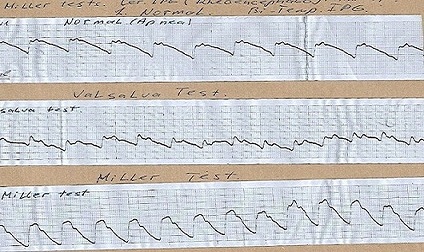
Not so long ago, I devoted a whole note to a method called “Rheoencephalography.”
This is an absolutely painless, labor-intensive and “bloodless” (that is, without violating the integrity of the body, in English NON-INVASIVE, not “intrusive”) method of controlling cerebral circulation. In particular, this method provides clear information, for those who understand, about the state of TONE of the cerebral vessels, that is, the degree of tension of the vessel wall. But this degree depends on the physical condition of this wall!!! If the wall becomes thinner, the smooth muscles surrounding the arteries and arterioles weaken and degenerate, all this will immediately affect the rheoencephalogram. This means that simple automatic monitoring can monitor the condition of the vessel walls and prevent overdose of anticoagulants and thrombolytics. Or, say, give a small amount of vasoconstrictors, that is, substances that constrict the walls of blood vessels by reducing the smooth muscles of the walls, adrenaline, for example.
The disadvantage of the method is precisely its high sensitivity to the slightest changes in blood flow, movements, breathing, even blinking of the patient. But all these interfering factors can be removed using digital, microcomputer-controlled filters, and the method can be made publicly available.
It’s up to companies that manufacture medical devices and specialists.
15 VII 2020

 Esprit de L'escalier